The Passion of St. Irenaeus, Bishop of Lyons
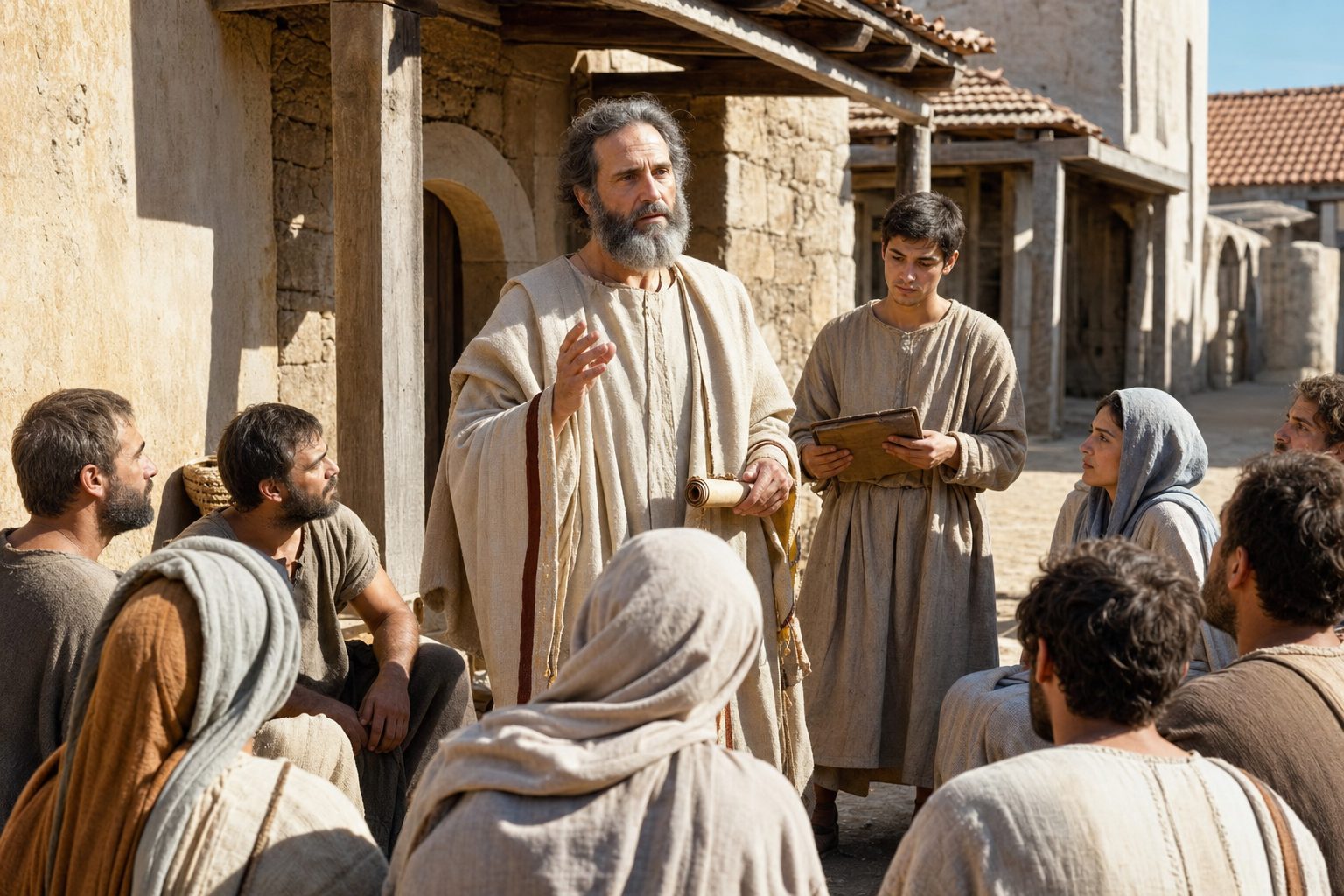
Saint Irenaeus, bishop of Lyons, was one of the most remarkable fathers and teachers of the Church. He lived and worked in the 2nd century, devoting his entire life to the struggle against gnosticism.
The representatives of the Egyptian gnosis were: Keirinf (a contemporary of St. John the Apostle and Evangelist John the Divine), Valentinus and Vasilis; the Siro-Chaldean gnosis was supported by the followers of Simon the Magician and Menander; the Minor Asiatic gnosis was supported by the heretics Kedron and Markion.
Gnostics strictly distinguished between divine, <unk> spiritual, <unk> and worldly, <unk> carnal <unk> being; all gnostic systems rejected the very possibility of communication between absolute (all-perfect) being and relative being (i.e. world existence).
The Gnostics denied divine revelation and explained all the truths of the Christian faith by the efforts of reason alone.] Its significance for the Christian Church in the second century can be compared to the significance of St. Athanasius the Great [His memory is celebrated on May 2 and January 13 (there also his life).] for the Christian Church in the fourth century.
Both are equally, and predominantly, in their life and activity, defenders of the pure, intact church teaching against the false heretical teachings of their time, <unk> St. Irenaeus <unk> against gnosticism; St. Athanasius <unk> against Arianism.
Arius' heresy was condemned at the first (325) and second (381) Ecumenical Councils, and the Symbol was composed by the assembled Fathers. In the V century, Arianism had almost no followers in the Roman Empire, but was revived in Germany among the Goths, Burgundians, Vandals and Langobards, where it existed until the VII century.]
St. Irenaeus was originally from Asia Minor; his hometown was the city of Smyrna; from his youth, Irenaeus studied all the Greek wisdom thoroughly; he was well acquainted with Greek poetry, philosophy and other Greek sciences.
However, St. Irenaeus did not become enthralled with false worldly knowledge. Hearing about spiritual wisdom, <unk> the pre-wisdom of Christianity, Irenaeus wished to receive it with all his heart; now he wanted to learn only this true soul-saving wisdom, worldly wisdom <unk> the Hellenic, he did not.
This holy Polycarp was a disciple of the holy Apostle and Evangelist John the Theologian [Memory of him 26 September] and was himself placed on the episcopal throne of the city of Smyrna.
The great honor of this epistle has been preserved in Eusebius' "Church History". <unk> Of the many writings of St. Polycarp, the "Epistle to the Philippians" has been preserved (in Latin translation); in this work Polycarp lays out the foundations of Christian faith and morals, warns against heretics, lays out the duties of presbyters and deacons, young men and virgins, etc.
Also known (in Latin) are several "Answers" of Polycarp, which contain an explanation of certain sayings of our Lord Jesus Christ.
According to the testimony of the blessed Hieronymus, Polycarp is also credited with writing a letter against the heretic Evion; in addition, Polycarp is also credited with writing an epistle to the Athenian church and the "Teaching".] He worked very hard for the Church of Christ, for he not only cared for his flock in Smyrna, but also wrote letters to neighboring churches.
According to the testimony of the blessed Hieronymos, one of the greatest teachers of the Western Church (330-419), of Slavic origin (from the city of Strydon in Dalmatia), Hieronymos received in Rome a brilliant education for his time; in 373 he went east, having previously received baptism; for his pious life Hieronymos was ordained as a presbyter.
<unk> Blessed Hieronymos wrote many writings on various questions of theological knowledge. <unk> The writings of Blessed Hieronymos are divided into four main groups: 2) explanatory, 2) dogmatic, 3) moral and 4) historical.
In addition, of Hieronym's writings, the following deserve special attention: "Chronicle", "Life of the Fathers", "About Famous Husbands", "Martyrology" etc. The number of all the writings of the blessed Hieronym, not counting the small letters, reaches 180.
Saint Irenaeus was a disciple of this glorious Polycarp, and when he heard the saving teaching of Christianity from his lips, he loved it more than any worldly science. Having become a disciple of Polycarp, Saint Irenaeus became as it were a disciple of Christ Himself, for he diligently received the truths of the Christian faith with his mind and devoted himself to the service of God.
Polycarp was a disciple of the apostle John the theologian, and he passed on to St. Irenaeus all that he had heard from the apostles, who were self-proclaimed servants of Christ.
The bishop of Lyon at that time was St. Pofinus, who later recorded his preaching as a martyr for the name of Christ.
At this time there was a violent persecution of Christians by the pagans in Lyons, and St. Irenaeus was a valiant defender of Christians and a firm pillar of the Church. From here St. Irenaeus was sent by Bishop Pophinus to Rome to take the letter of the confessors to Bishop Eleopherius.
Returning from Rome, after the martyrdom of St. Pophin, St. Irenaeus took over the hierarchical throne.
St. Irenaeus was a good shepherd for the citizens of Lyons in the most difficult times for them, for then the Church of Christ was troubled by many troubles: wicked idolaters then raised a cruel persecution against Christians and, in addition, godless heretics began to sow confusion and disagreement in the Church of God.
St. Irenaeus endured all the persecutions and troubles inflicted on him by idolaters for the sake of Christ, while he dreadfully armed himself against heretics with his words and writings.
St. Irenaeus maintained the most lively relations with the Roman Church, as well as with the Churches of Asia Minor, as evidenced by his letters to the Roman presbyters Florinus and Vlas, as well as his letters to the Roman and Minor Asian bishops during the disputes over the celebration of Easter that arose under Pope Victor I. St. Irenaeus always tried to reconcile the hostile and disagreeing.
For example, when Pope Victor I of Rome threatened to divide Eastern and Western Christians because of their differences over Easter celebrations, St. Irenaeus was able to prevent a split and reconcile those who disagreed with him.
He wrote many works in which he boldly denounced the errors of heretics and exposed the truths of the Christian faith. Of all his works, the most remarkable is the work entitled "Against Heresies".
This work is divided into 5 books and belongs to the most remarkable polemical works.] This work was begun by St. Irenaeus at the request of one of his friends in order to refute the heresy of the Valentinians [These heretics received this name from the name of their chief founder, <unk> Valens], who were then spreading their false doctrine not only in Rome, but also in Gaul.
St. Irenaeus, then, in order to show the falsehood and the essence of the Valentinian heresy, which was merely a repetition of the earlier errors of the heretics, described the most ancient heresies that had arisen earlier and that had fought against Christianity; and with true Christian wisdom, Irenaeus refuted all the errors of the heretics and revealed the only saving doctrine - Christian.
The four New Testament Gospels, written by the disciples and eyewitnesses of the Lord, are the main foundation upon which all Christian doctrine rests, the "pillar and support of the Church" ["Against Heresies", Book III, Chapter 11].
These Gospels, <unk> Irenaeus reasoned, <unk> are as follows: the Gospel of Matthew, written in Hebrew, the Gospel of Mark, <unk> the disciple of the Apostle Peter, the Gospel of Luke, <unk> the companion of the holy Apostle Paul, and the Gospel of the beloved disciple of the Lord John, written by him during his stay in Asia Minor, in Ephesus.
Thus of the authentic apostolic Gospels, authentic and infallible, there are only four in the Church; and "it is impossible, <unk> reasoned St. Irenaeus, that the Gospels should be more or less than there are in the Church" [ibid., book III, chapter 11]. <unk> The followers of (heretic) Valentine, <unk> he continues, <unk> without any fear offer their writings and boast that they have more Gospels than there are.
They have gone so far as to call their recent work the "Gospel of Truth", though it is in no way in accord with the Gospels of the Apostles; for if the Gospel they propose is true, and yet not at all like that which the Apostles have handed down to us, then those who wish to know, as the Scriptures themselves show, <unk> that it is not the Gospel of Truth handed down by the Apostles [ibid].
<unk> And that the Gospels are true and trustworthy, St. Irenaeus proves as follows.
The four Gospels must be four, for there are only four countries on earth; then the fourfold number of Gospels must correspond, according to St. Irenaeus, to the four covenants which God gave to mankind, <unk> the covenant given to Adam before the flood, the covenant given after the flood to Noah, <unk> the law given to Moses and finally the fourth and last covenant <unk> the Christian covenant, which contains all the other covenants
[There it is.] .
Finally, the most important proof is precisely the fourfold number of the Gospels, and not more or less, St. Irenaeus sees in accordance with the Gospels the four apocalyptic beasts, <unk> the cherubim, on which from eternity sits "the Word that makes and contains all things".
The strength of this evidence is that the Gospel must be an expression of the four kinds or modes of activity of the Son of God, which are indicated in the Apocalypse [Revelation, chapter 4] under the symbol of the four beasts <unk> cherubs.
The first beast, as described in the Apocalypse, is like a lion and indicates the eternal dominion and royal power of the god Word; this is also expressed in the Gospel of John, describing the eternal and glorious birth of the Son from the Father, as God from God: "In the beginning was the Word, and the Word was with God, and the Word was God.
The second animal, like a calf, signifies the high priestly service of our Lord Jesus Christ, to which, according to St. Irenaeus, the Gospel of Luke also points; it begins with the story of the priest Zechariah offering a sacrifice to God; this means that the Lamb, predestined from eternity to take away the sins of the world, appeared in the world to offer a propitiatory sacrifice to God for the sins of mankind.
The third beast on which the Word sat had the face of a man and pointed to the appearance of the Son of God in the likeness and form of a man; and the Gospel of Matthew likewise focuses on the humanity of Jesus Christ, representing His Son as Joseph and Mary.
<unk> Finally, the fourth beast is like an eagle flying and indicates the presence in the Church of the Holy Spirit, sent down by God the Father for the redemptive merits of the Son of God; and the presence of the Holy Spirit expresses, according to St. Irenaeus, the Gospel of Mark, written in the form of a compressed and as it were abridged story, because this is precisely the prophetic spirit.
"Thus, <unk> concludes St. Irenaeus, <unk> what the activity of the Son of God is, such is the species of animals, and what the species of animals is, such is the character of the Gospel.
The complete conformity of the Gospels to the four modes of activity or ministry of our Lord Jesus Christ constitutes, therefore, an indisputable proof of their genuine apostolic origin, their truthfulness and reliability; all other Gospels, which are given to be true, <unk> are not authentic and untrustworthy, <unk> because there can be only four authentic Gospels, neither more nor less.
St. Irenaeus especially condemned heretics who denied the unity of God's being. Heretic Marcion erroneously asserted two opposite actions in God, expressed in the two covenants, <unk> Old and New; he asserted that there are two gods, <unk> one punishing and chastising, and the other <unk> merely merciful.
The true God, Saint Irenaeus reasoned, cannot be either exclusively punishing and chastising, without love and kindness, or exclusively good and merciful, without justice and judgment, because both love and justice are essential and necessary to God. One of the essential attributes of God, Saint Irenaeus reasoned, is wisdom. If God is all-wise, then he has the ability to determine and decide.
And if he judges, then he rewards, that is, he punishes or rewards.
One of the main arguments on which Marcion based his theory of the antithesis between Old Testament and New Testament domesticity, between the Old and New Testaments, was that God's actions in the Old Testament were as if contrary to God's actions in the New Testament; God in the Old Testament is as if only a God of justice and truth, Marcion reasoned, God in the New Testament is as if exclusively a God of love and goodness.
In his writings, St. Irenaeus refuted this wicked error of Marcion and revealed the idea that both the Old and New Testaments constitute one inseparable whole. To attribute to God in the Old Testament only justice, and in the New Testament only one all-encompassing love, means, according to St. Irenaeus, not to know and not to understand the spirit and meaning of either or the other testament.
God punishes severely in the Old Testament, but He will punish even more severely in the New Testament. Christianity is more perfect than Judaism, the New Testament is broader and fuller than the Old Testament; on this basis, the requirements of Christianity should be much stricter than the requirements of Judaism.
In Judaism less means were given for the fulfillment of the divine law, in Christianity much more, <unk> in Christianity all the gracious gifts and powers for the fulfillment of the divine law are communicated; consequently, every violation and non-fulfillment of this law in Christianity must be punished much more severely than in Judaism. <unk> "In the New Testament, <unk> Saint Irenaeus reasoned, <unk> how much our faith in God has increased (i.e.
As much as we are commanded to abstain not only from evil deeds, but even from evil thoughts, from idle talk, from frivolous words and empty speeches, so much more are we commanded to abstain from those who do not believe the Word and despise His coming" ["Against Heresies", Book I, chap. 27; compare Book III, chap. 25; Book IV, chap. 28 and 40].
In Judaism, by the very fact that it is not more perfect than Christianity, the punishments of God, according to St. Irenaeus, were "moderate", and as it were temporary punishments; and in Christianity, because it is higher and more perfect than Judaism, these punishments are much more severe and are no longer only temporary, but eternal ["Against Heresy", Book IV, Chapter 28].
Thus, in both the Old and New Testaments, God reveals Himself equally as being and punishing and loving; and there and here, He rewards and punishes, and is merciful and punishes.
The Old Testament law, according to St. Irenaeus, has two sides: the external, ritual, and the internal, moral-spiritual.
The external aspect of the law was only relative and temporary: those ritual precepts and regulations which surrounded the whole life of the Old Testament man and which kept him under the yoke of slavery, according to St. Irenaeus, had meaning only in relation to the Jews, and were in the hands of the Providence of God only the necessary means for the moral and religious education of the Jewish people; Jews had to be kept under the yoke of slavery, <unk> "according to
"They have turned back to idols and have cast for themselves golden calves" ("Against Heresies", vol.
With the coming of the New Covenant, however, the ceremonial precepts of the Mosaic law were completely unnecessary and superfluous, because man was now in a different relationship to God, in a close relationship, as a son, and was able to fulfill God's commands freely and without coercion, without any special detailed external precepts.
The spirit of slavery in man's relationship to God in the Old Testament and the spirit of sonship in the New Testament, according to St. Irenaeus, do not contradict each other at all.
The same God educated ancient mankind in a certain way, and he educates the new humanity in a very different way. "God makes all things orderly and orderly", says St. Irenaeus, "and there is nothing immeasurable with Him, because there is nothing disorderly".
As a necessary educational tool in the hands of the divine covenant, it proved unnecessary and superfluous and therefore abolished, <unk> the outer side of the law of Moses was at the same time, according to the reasoning of St. Irenaeus, a prophecy about the future times of the Messiah, and had a formative significance.
But what especially speaks against Marcion's theory is the Savior's attitude to the inner, moral side of the Old Testament law; the Savior, says St. Irenaeus, did not abolish this side, but only "fulfilled and extended it" [ibid., book IV, chapters 12 and 13].
The chief moral commandment of the Mosaic law was love of God and neighbor; the Savior does not abolish this commandment, but, on the contrary, affirms and clarifies it as the basic commandment of the New Testament law. The moral teaching of the Gospel and the New Testament in general is higher and more perfect than the moral teaching of the Old Testament, <unk> but the main basis of both is the same; hence the Culprit of both moral teachings <unk> is the same.
Thus, <unk> according to St. Irenaeus, <unk> between the Old and the New Testament there is not the slightest contradiction, and both are the creation of the same true and supreme God, who arranged the work of salvation of men in a strictly gradual and sequential manner, according to a wise plan drawn from eternity; hence it is clear that the Old Testament writings, in which God's will and plan for the salvation of men are expressed, are equally divinely inspired and
Salvific, as are the New Testament scriptures, which describe the very accomplishment and assimilation of salvation.
"One and the same Spirit of God, <unk> says St. Irenaeus, <unk> Who by the mouth of the prophets foretold the coming of the Lord, and by the mouth of the elders [meaning the seventy interpreters] interpreted well the things which were spoken by the prophets, <unk> Who also by the Apostles preached that the fullness of the times of adoption had come, and that the kingdom of heaven was at hand".
According to the teaching of St. Irenaeus, God is Lord of all in the broadest sense of the word. He alone is Lord and Master of all, and there is no other equal or like to Him Lord and Master, and there cannot be, "because, says St. Irenaeus, he who has anyone above himself or equal to himself can no longer be called either God or great King" [Equal Book II, Ch.
Only one God, as Lord of all, <unk> possesses supreme power and power over all; all other things exist by Him, created by Him and contained in His power.
The Holy Scriptures, both Old and New Testament, <unk> undoubtedly have divine origin, for they were written under the special spiritual inspiration of the Spirit of God upon the writers of the holy books. This Holy Spirit acted both through the prophets and through the Apostles.
A correct and unerring understanding of Scripture is possible only under the guidance of the holy universal Church, and only in her can truth be found.
The sacred Tradition has the same divine origin as Scripture, <unk> which, therefore, constitutes another source of faith and religious knowledge, equally true and infallible and binding on all, as the Holy Scriptures, the sole custodian of the truly apostolic Tradition can only be the universal Church, in the person of her predecessors.
<unk> "Everyone who desires to know the truth, <unk> reasoned St. Irenaeus, <unk> must turn to the Church, because the Apostles alone have communicated the divine truth, and like a rich treasure, have put into it all that pertains to the truth.
This significance of the Church, as the only infallible guardian and bearer of the genuine apostolic tradition, Saint Irenaeus bases on the constant presence in her of the Holy Spirit, and on the constant action in her of divine gifts and powers.
In the Church, God has placed all the necessary ministries, <unk> apostleship, prophecy, teaching <unk> by which our salvation is accomplished.
Hence the divine truth contained in it by the apostles, whether orally or in writing, will always remain in it the same, as pure and divine truth as it was with the apostles, for the same Holy Spirit worked in the apostles, works now in the church, in the person of their successors.
The succession of the apostolic title, Saint Irenaeus reasoned, is preserved in the Church everywhere and continuously, and with it the apostolic tradition is preserved in its pure and undamaged form. "In general", observes Saint Irenaeus, "the Church, though scattered throughout the world, by virtue of the presence in her of the same Spirit of God, by virtue of the continuity in her of the same apostolic title, preserves everywhere the same teaching.
It believes alike, having as it were one soul and one heart, preaches alike, teaches alike, and transmits alike, having as it were one mouth. The same church believes and has the same tradition in Germany, and Spain, and Gaul, and in the East, in Egypt, and Libya. As the sun is the same in all the world, so the preaching of truth shines and enlightens all the same in the whole Church" [Ibid., book I, chapter 10].
Thus, by teaching and admonishing all, St. Irenaeus saved many from pagan idolatry and heretical error; he instructed many Christians to be saved, and strengthened others to martyrdom.
For confessing the Gospel, St. Irenaeus was beheaded and received the glorious crown of martyrdom in the Kingdom of our Lord Jesus Christ.
He is the author of the "Epistle to the Roman bishop Victor" (on the question of the time of Easter), "On monopoly, or that God is not guilty of evil", "On the osmerice" (i.e. eons; <unk> refers to the refutation of the gnostic teaching about eons as the sources of life).
I 'm not going to tell you what to do .